

This article was published by the US Energy Information Administration on June 2, 2025.
By Troy Cook
Onshore crude oil production in the U.S. Lower 48 states (L48) has more than tripled since January 2010, driven by tight oil production growth in the Permian region. Onshore crude oil production is made up of both legacy oil production, primarily from vertically drilled wells, and newer tight oil production, primarily from horizontally drilled wells.
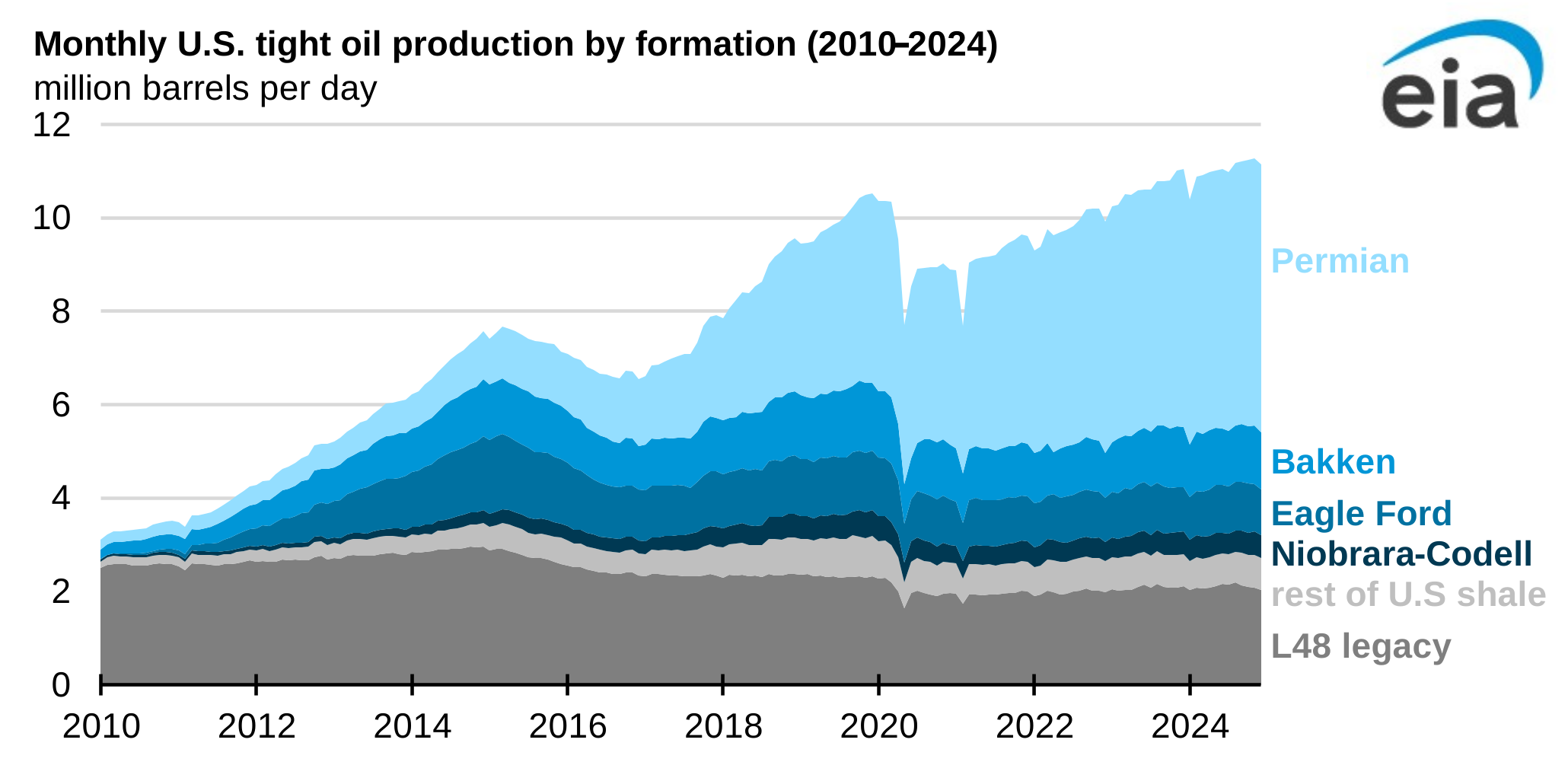
Note: L48=U.S. Lower 48 states
Legacy production decreased from 2.6 million barrels per day (b/d) in 2010 to 2.1 million b/d in 2024. Over the same period, tight oil production increased from 0.8 million b/d to 8.9 million b/d, accounting for 81 per cent of total onshore L48 oil production in 2024. The Permian accounted for 65 per cent of all tight oil production growth and 51 per cent of L48 oil production in 2024.
Since 2010, U.S. tight oil production within and outside of the Permian has generally grown. Tight oil production from non-Permian plays decreased from 2015 to 2017 in a period of low oil prices. At the beginning of 2020, tight oil production from the Permian region was essentially equal to tight oil production from all other producing regions in the United States. Permian and non-Permian oil production both fell significantly in response to crude oil prices falling below $50 per barrel (b) related to the COVID-19 pandemic, with production reaching annual lows in May 2020. After 2020, however, production in the Permian increased at a faster rate than production outside the Permian.
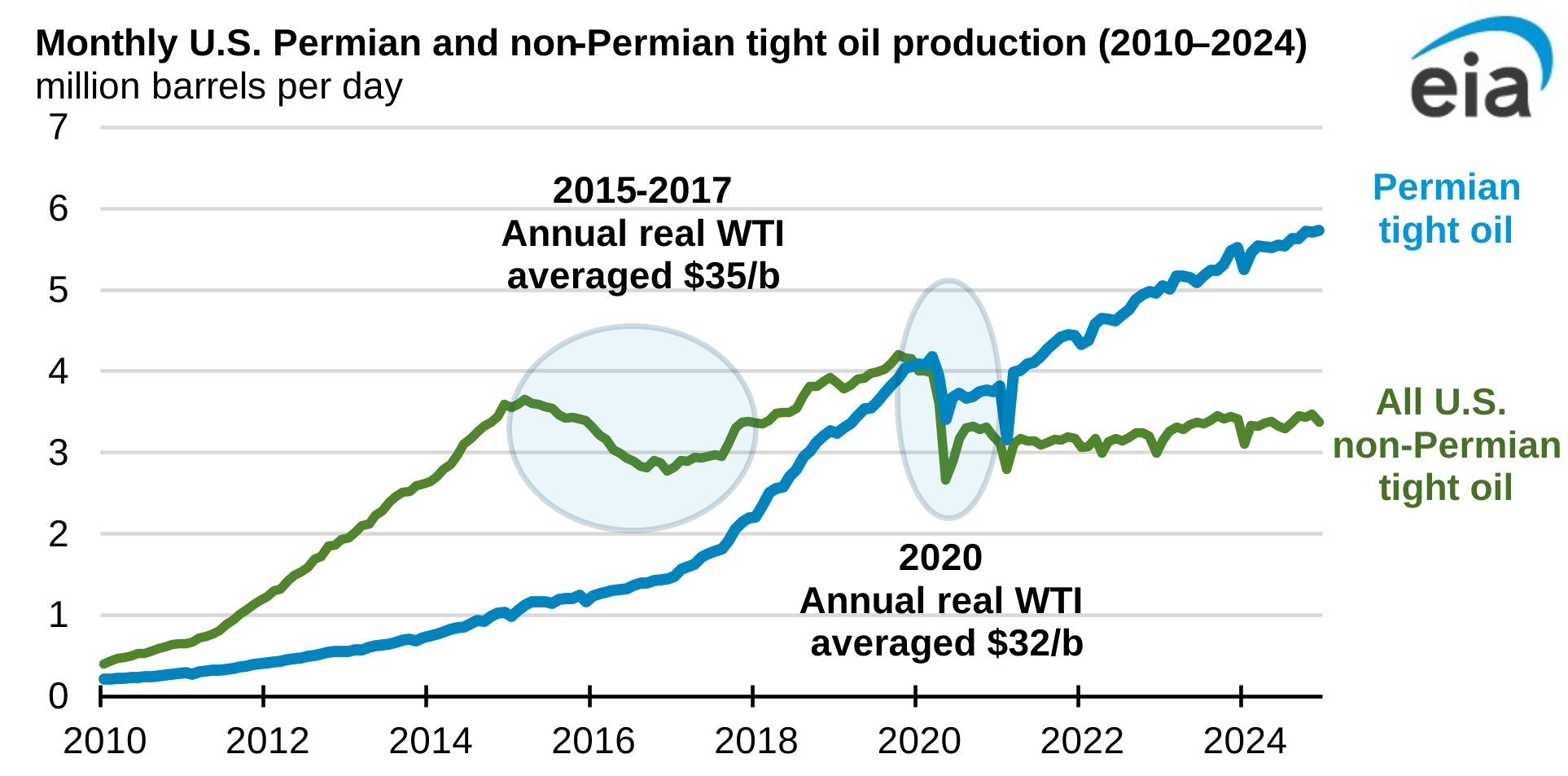
Note: WTI=West Texas Intermediate
Tight oil production in the Permian began growing again in 2021 as crude oil prices rose, but production in the non-Permian remained low. After 2020, Permian tight oil production grew at a slower rate than 2017–19, but by December 2024, Permian production reached 5.6 million b/d, up 45 per cent compared with 2020. In contrast, non-Permian tight oil production decreased by 14.9 per cent (0.6 million b/d) based on the annual average oil volumes from 2020 to 2024.
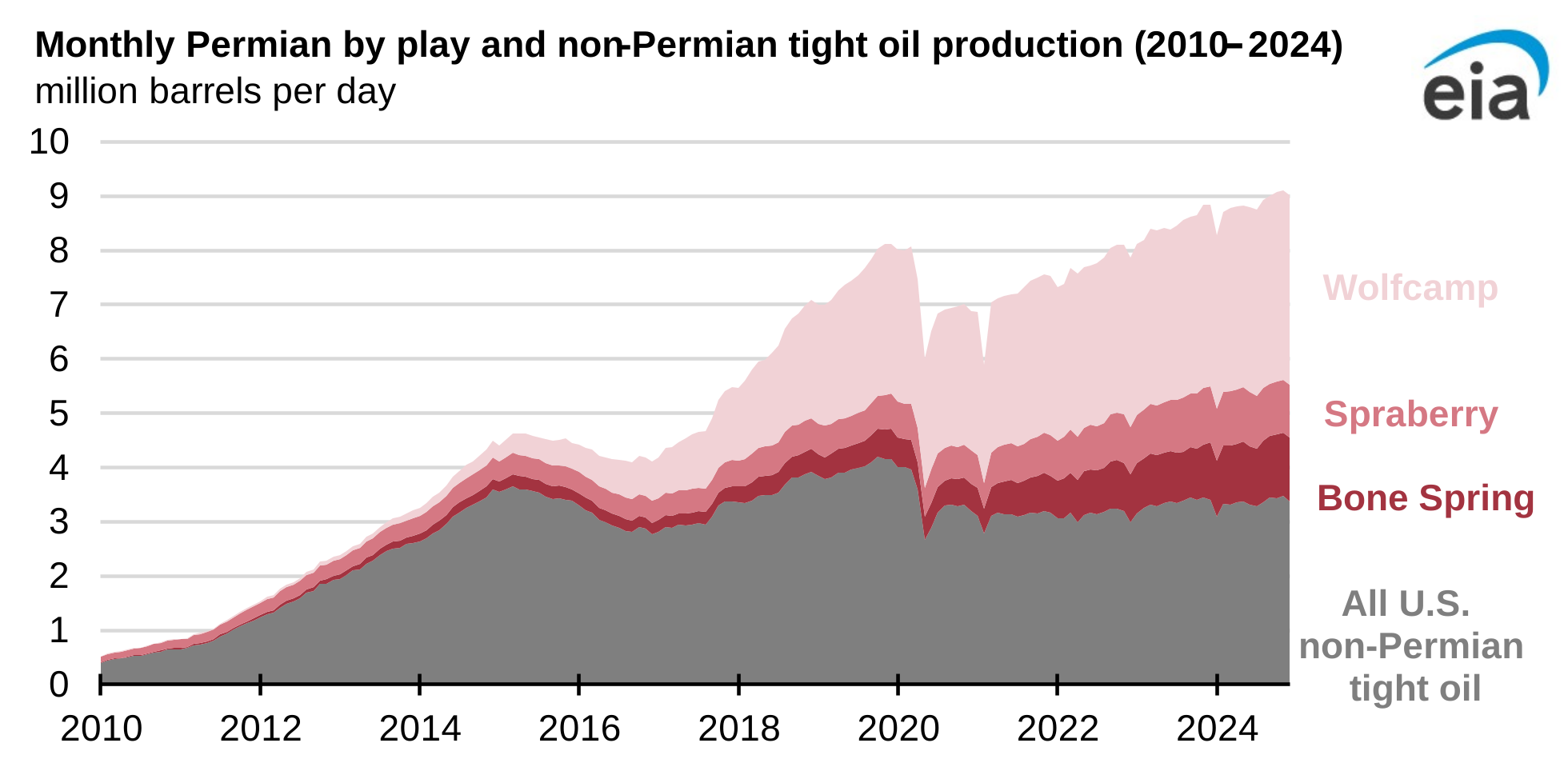
Within the Permian region, the Wolfcamp, Bone Spring, and Spraberry plays produce most of the tight oil, accounting for 99 per cent of Permian tight oil production in 2024. The Wolfcamp play, the largest of the three, has driven growth in the Permian and produced 3.4 million b/d of tight oil in 2024, which was equivalent to production from all other non-Permian tight oil plays combined. The Spraberry and Bone Spring combined produced an average 2.1 million b/d in 2024.

Be the first to comment