
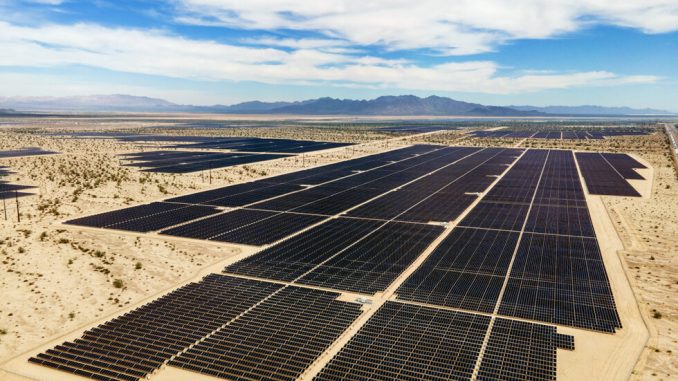
California’s electricity market is undergoing a quiet transformation. According to new data from the EIA, natural-gas-fired electricity generation in the state has been on a steady decline through 2025, while solar power output has surged. Between January and August 2025, California’s utility-scale solar facilities produced 40.3 billion kilowatthours (BkWh) — nearly double the 22.0 BkWh generated in the same period in 2020.
Over the same eight-month window, natural gas supplied 45.5 BkWh of electricity — a drop of 18 per cent compared with the 2020 level. Most notably, the year-on-year decline from 2024 to 2025 was 17 per cent (-9.5 BkWh) as solar and battery-dispatch systems stepped into midday and evening roles previously held by gas-fired units.
While natural gas remains the single largest fuel source for electricity in California, the power-generation mix is shifting. The midday hours of May and June — when cooling demand is high but solar output peaks — tell the story: solar generation during those hours grew from 10.2 gigawatts (GW) in 2020 to 18.8 GW in 2025, according to the California Independent System Operator (CAISO). At the same time, battery output during peak evening hours (5 p.m.–9 p.m.) rose from under 1 GW in May–June 2022 to 4.9 GW in the same months this year, clearly stepping into the role of balancing higher solar output and displacing natural-gas generation.
The implications are significant for the broader energy-transition narrative — including in Canada. California’s pivot away from gas-fired plants is being driven by a combination of strong solar growth, improving battery storage capacity and regulatory mandates favouring clean energy. In turn, this shift places pressure on natural-gas-dependent power-generation businesses and associated infrastructure, and signals how quickly states may decouple electricity generation from fossil fuels.
Even where natural gas supply remains available, the growth of renewables plus storage is redefining the demand side of the market. California’s example underscores how gas-generation units can be displaced — not necessarily by a lack of fuel, but by cleaner alternatives becoming both cost-effective and operationally feasible during the day and evening peaks.
From a policy perspective, Canada must watch closely. Provinces with heavy gas-fired generation (or plans relying on gas as a transition fuel) could face a structural risk if solar-plus-storage dynamics gain traction — particularly in western markets where grid-flexibility, storage capacity and renewables supply are converging. Furthermore, as California shows, solar’s rise isn’t just about replacing coal or older plants — it challenges the role of natural-gas plants in the near future.
For utilities and regulators alike, the story raises two central questions: How should power-system planners value natural-gas generation when the renewable/storage dispatch paradigm is shifting? And how do provinces balance ongoing gas-infrastructure investments with the risk of early retirement or under-utilisation?
California’s shrinking use of natural gas for electricity is both a demand-side and policy-driven phenomenon. It challenges traditional baseload thinking, and pushes gas into a more flexible, backup-oriented role. For Canada’s energy-transition path, the broader message is clear: abundant fuel supply won’t guarantee generation growth or stability if the demand side is changing fast.

Be the first to comment