
This article was published by the US Energy Information Administration on July 7, 2025.
By Mickey Francis
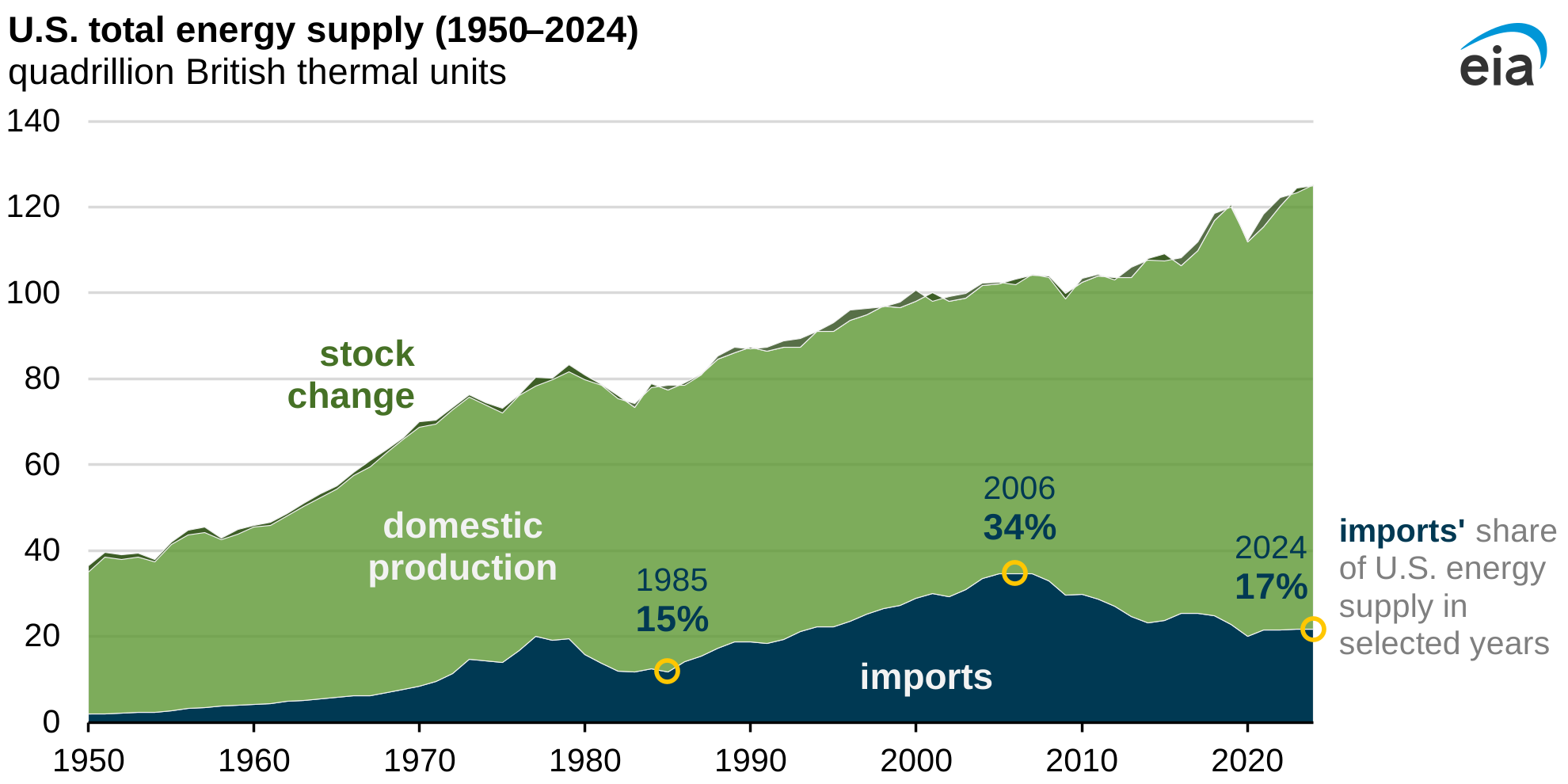
In 2024, the United States imported about 17 per cent of its domestic energy supply, half of the record share set in 2006 and the lowest share since 1985, according to our Monthly Energy Review. The decline in imports’ share of supply in the previous two decades is attributable to both an increase in domestic energy production and a decrease in energy imports since 2006.
Data values: Primary energy overview
U.S. energy supply comes from three sources: domestic energy production, energy imports from other countries, and any energy brought out of storage.
In 2024, for the third consecutive year, the United States remained a net exporter of energy, producing a record amount that continues to exceed consumption. Individually, U.S. natural gas, crude oil, natural gas plant liquids (NGPLs), biofuels, solar, and wind each set domestic production records in 2024.
In our Monthly Energy Review, we convert different measurements for different sources of energy to one common unit of heat, called a British thermal unit. We use British thermal units to compare different types of energy that are not usually directly comparable, such as barrels of crude oil and cubic feet of natural gas. Appendix A of our Monthly Energy Review shows the conversion factors that we use for each energy source.
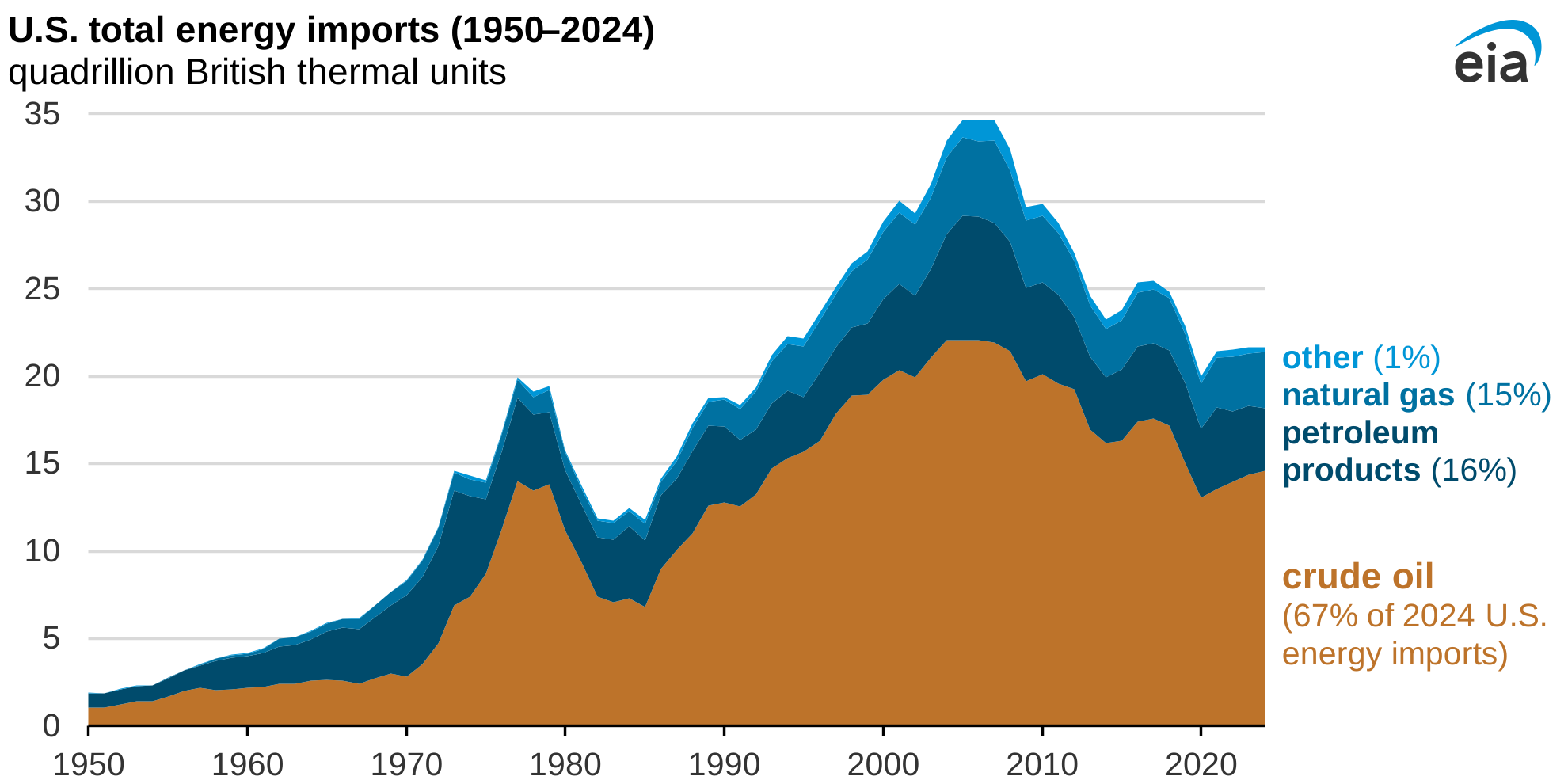
U.S. total energy imports were about 22 quadrillion British thermal units in 2024 and have been relatively flat since 2021. Crude oil and refined petroleum product imports combined accounted for 84 per cent of U.S. total energy imports in 2024, with natural gas accounting for most of the remainder at 15 per cent.
Data values: Primary energy imports by source
Note: Other includes biofuels, electricity, coal, and coal coke.
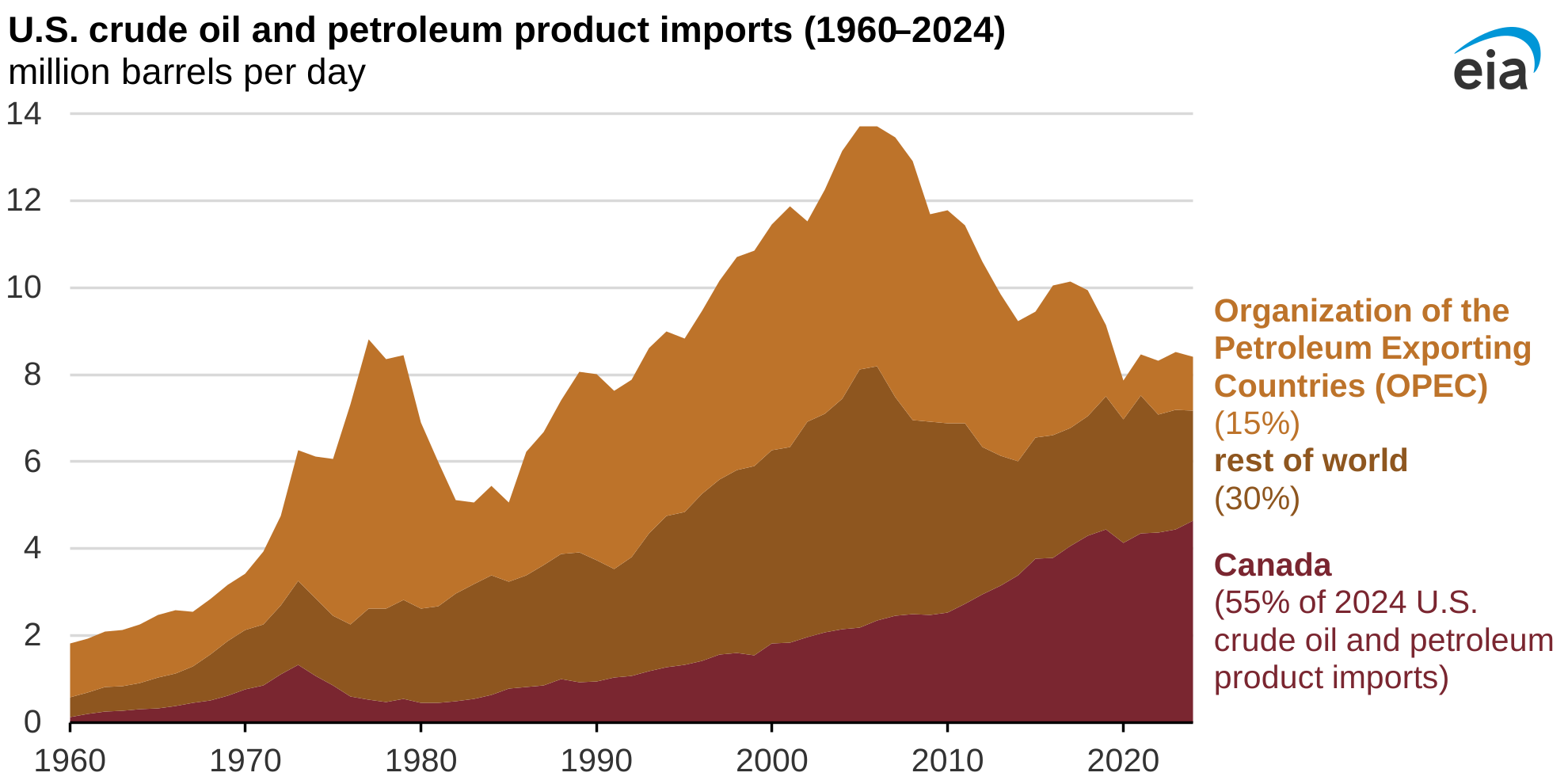
Between 2006 and 2024, U.S. imports of crude oil and petroleum products fell 39 per cent, from about 14 million barrels per day (b/d) to 8 million b/d. All of the decrease occurred in the Gulf Coast region, home to large shares of domestic production and consumption, and the East Coast region, home to a large share of domestic consumption. However, during the same period, imports of crude oil and petroleum products increased in all other regions: the Midwest, Mountain, and West Coast.
In 2006, OPEC countries, including Saudi Arabia, Algeria, and Iraq, in aggregate accounted for the largest share of U.S. crude oil and petroleum imports. Since then, imports from OPEC countries decreased 77 per cent while imports from Canada nearly doubled. Total crude oil and petroleum imports from Canada to the United States exceeded those from OPEC for the first time in 2014 and have every year since. Following the recent expansion of Canada’s Trans Mountain pipeline, U.S. imports of crude oil from Canada reached record highs in 2024. Nearly all crude oil used by U.S. refineries in the Midwest and Mountain regions comes from Canada.
Data values: Petroleum trade overview and imports from non-OPEC countries

Be the first to comment